
Garage Door Maintenance & Tune-Up
Annual service: lubrication, hardware torque, balance test, and safety checks.
View serviceA door frozen to its bottom seal needs a careful release, not a stronger opener command. Clear loose snow and assess threshold ice. Stop if the door lifts unevenly, the motor strains, or a cable changes position.
A frozen garage door is usually stuck where ice has bonded the bottom seal to the slab. Brush away loose snow and gently soften or remove visible ice beside the threshold before making one opening test. If the opener hums, the seal tears, the door rises unevenly, or a cable looks loose, stop. Forcing an ice-bound door can damage the lifting system.
Meltwater can collect beneath a garage door's bottom seal and freeze to the concrete overnight. When the opener tries to lift the bonded door, it can tear the weather seal, stress the drive mechanism, or expose an unrelated cable or track problem. Begin only with the door fully closed. Avoid metal shovels against the seal, open flame, boiling water, and pry bars. These methods can damage the door, create a slipping hazard, or leave more water behind to refreeze. The goal is to soften and remove visible ice gradually, then make one cautious observation of the door's movement. If one corner rises first or the door strains, stop rather than forcing the bond.
Start at the top. The early checks are the most common causes and need no tools.
Use a broom or plastic snow shovel to clear loose snow from the outside edge of the door and nearby driveway. Work outward so you can distinguish packed snow from ice along the concrete. Do not strike the rubber seal, wedge a shovel beneath the door, or use the bottom panel as leverage.
What it means: If packed snow was the only barrier, clearing it may restore normal door movement.
Inspect the entire threshold for a narrow ice ridge beneath the bottom seal. From inside, look for water pooled just behind the door. Do not lift on the door by hand while the seal is still attached to the slab; the rubber can rip or the door can release abruptly once the bond gives way.
What it means: A continuous frozen line under the seal confirms the threshold is holding the door down.
Use a hair dryer on a cautious low setting to soften a small exposed area of ice, keeping the cord dry and away from standing water. Continue gradually along the threshold. A plastic scraper may remove softened ice next to the seal, but do not drive it below the door or use it to pry upward.
What it means: Ice that separates without pulling on the seal may allow one careful opening attempt.
After the visible bond appears released, stand where both lower corners are in view and press the wired control once. Stop immediately if the motor labours, the door barely moves, or a lower corner begins climbing before the other. Repeated commands are not a safe way to break remaining ice.
What it means: Smooth, level movement supports an ice-only cause; strain or tilt requires professional service.
Following a safe opening, clear remaining slush and inspect the slab edge for a low spot that collects water. Dry the area as far as practical before closing. Check whether the bottom seal is torn, flattened, or irregular, since gaps can retain meltwater through the next freeze.
What it means: Recurring water at the threshold or a damaged seal explains why freezing can return.
Do not overpower a frozen door with the opener or pull it free with a vehicle. Stop if it raises unevenly, a cable no longer looks taut, ice reaches the track area, or the motor hums without lifting the door. Never use a torch, boiling water, or a metal bar to release the seal. If gentle thawing fails, leave it closed where possible and book a professional through the online form.
Markham averages 146.4 cm of snowfall and about 51 snowy days a year at the Buttonville climate station, so threshold snow and refreezing are recurring winter concerns. Cornell also has many rear-lane detached garages. Where a detached rear-lane garage is not heated, it may stay cold after a vehicle brings in slush, allowing water below the seal to freeze. Clear packed snow and tire slush before temperatures drop, and keep the laneway-side threshold free of meltwater. If that layout applies to your property, plan access carefully and avoid forcing the opener from a vehicle.
Fill out the form and we'll confirm your appointment by email.
These guides are written for Markham homes. If the fix is beyond a homeowner check, we work everywhere inside this area.
Map data © Google. Pin shows the service area, not a walk-in location — all work is done at your home.

A real callout, not stock imagery.
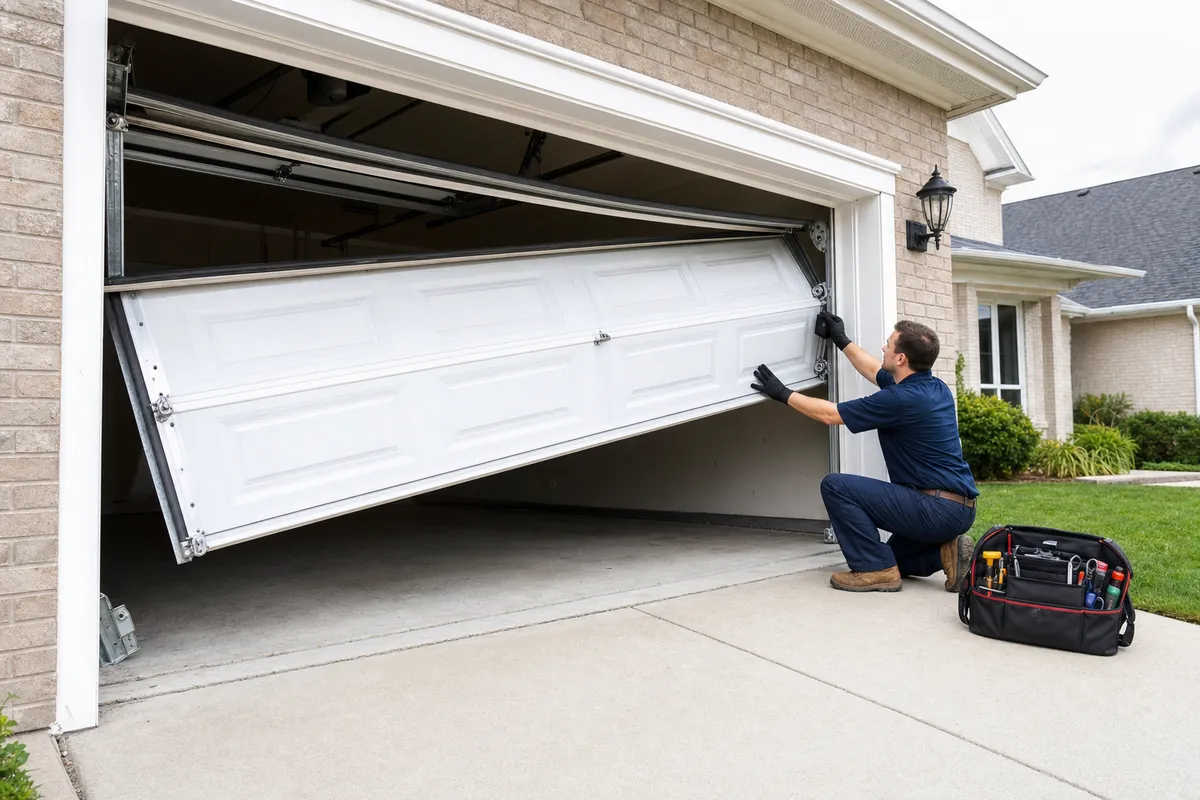
A sectional door pulled off its tracks, taken down and supported on site so it could be checked and re-hung safely — photographed on the job.
