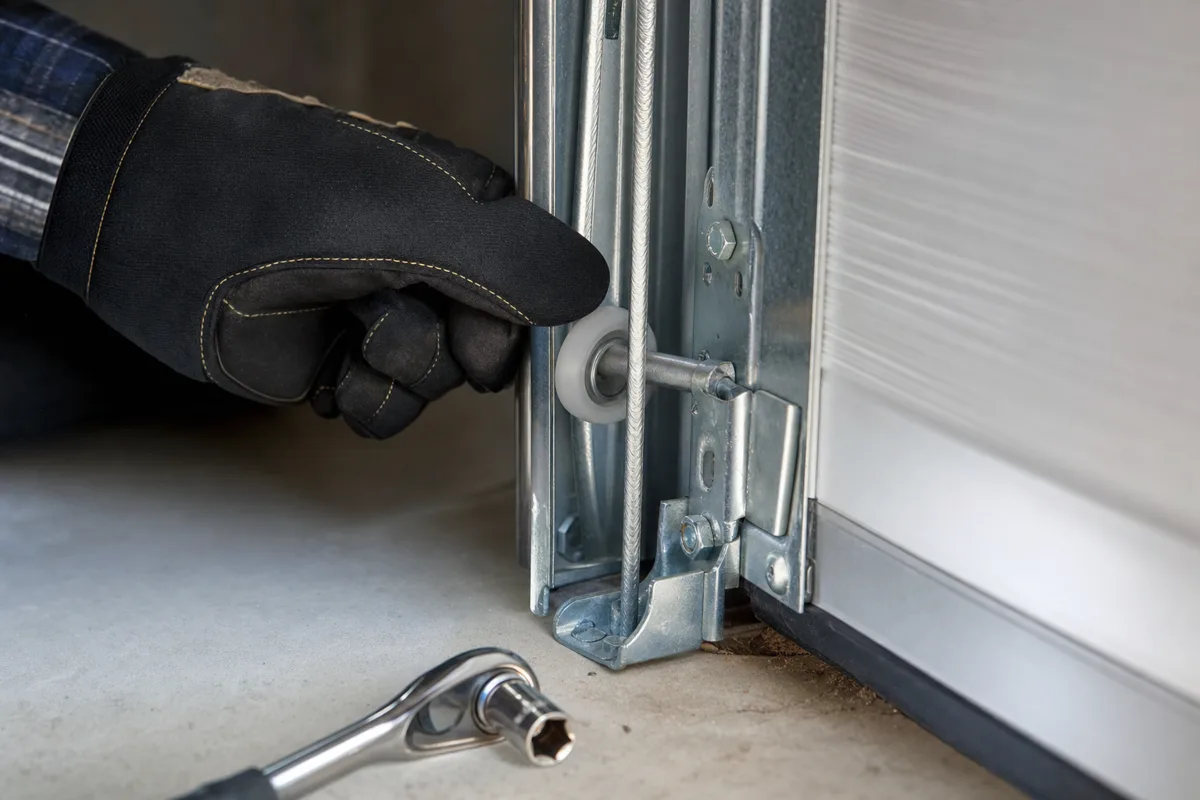

Garage Door Roller & Track Repair
Doors put back on track, seized rollers renewed, and bent rails straightened.
View serviceAn off-track door can shift weight onto only a few rollers, cables, and brackets. Stop all commands, avoid the doorway, and observe from a distance. Make the area safer; do not try to force the door back into alignment.
If a garage door is off track, stop the opener and do not push a roller back into the rail. A crooked door, roller outside the track, or slack cable can allow sudden movement. Keep clear of the opening and leave the door undisturbed if it appears stable. Professional track and cable repair is needed before any further opening or closing attempt.
An off-track door may show a roller outside its rail, a visibly crooked panel, a bent guide, or a door stopped at an angle. It can follow an impact, worn roller hardware, cable trouble, or a door that is no longer balanced. Do not correct it by pushing the panel, loosening track hardware, or asking the opener to try again. The tracks guide a heavy moving door along a precise path; once that path is lost, remaining rollers and cables can be overloaded. Keep people and vehicles out of the opening, make a few distant observations, and describe the door's position when arranging professional repair through the online form.
Start at the top. The early checks are the most common causes and need no tools.
Stop the current command and avoid every further button press. When the door is partly open, remain clear of the space below it and leave the emergency release untouched. Keep people, pets, and vehicles away from the doorway. From a distance, observe whether the door rests level or is hanging visibly to one side.
What it means: A tilted or partly raised door should be regarded as unstable and left alone.
Without approaching the moving hardware, look along each vertical rail and its curved upper section. A wheel may be outside the track, a roller stem may look bent at its hinge, or the rail may have spread apart. Do not place hands between door sections, inside a track, or behind a panel.
What it means: A roller outside its rail confirms the fault and means the opener should remain unused.
View each lower corner without touching its hardware. Note if a cable looks loose, has shifted on its drum, or hangs where it normally appears taut. Compare the height of the two bottom corners. Never try to wind the cable back, loosen the lower bracket, or alter any spring-connected fitting.
What it means: A displaced or slack cable shows the lifting system has lost controlled alignment.
From several steps back, check for recent dents in a panel, a bent section of rail, or an object stored in the door's travel line. A modest vehicle or storage impact can damage a roller or change track position without dramatic visible damage. Take a clear photograph only if doing so does not require entering the risk area.
What it means: Fresh damage near the panel or rail may explain why the roller left its path.
Note whether the door is closed, caught partway, or stopped near the curved track, and identify the lower side. Include any preceding scrape, bang, or motor strain in your booking details. Do not perform a manual movement test; the visible position and the sequence of events give a technician enough starting information.
What it means: The door's position and symptoms help separate track damage from cable, spring, or opener faults.
An off-track door can shift or fall because its guidance and load distribution have been compromised. Leave the emergency release alone; do not remove track bolts, force a wheel into place, or bend the rail with pliers. Cables and lower brackets may still carry significant load. Keep out from under an open door, do not park in the opening, and submit the online booking form promptly for professional track and cable repair.
Box Grove has active new-home construction, while newer phases in Angus Glen and Cornell continue to add homes. If an off-track condition appears at a recently built property, check the builder documentation and warranty status before paying for third-party work. A reported track, roller, or installation defect may need to be claimed through the builder, but coverage must be verified for the particular home. Until responsibility is confirmed, the safety approach does not change: do not operate the door, keep the opening clear, and document the visible condition with photographs from a safe distance.
Fill out the form and we'll confirm your appointment by email.
These guides are written for Markham homes. If the fix is beyond a homeowner check, we work everywhere inside this area.
Map data © Google. Pin shows the service area, not a walk-in location — all work is done at your home.

A real callout, not stock imagery.
A sectional door pulled off its tracks, taken down and supported on site so it could be checked and re-hung safely — photographed on the job.
