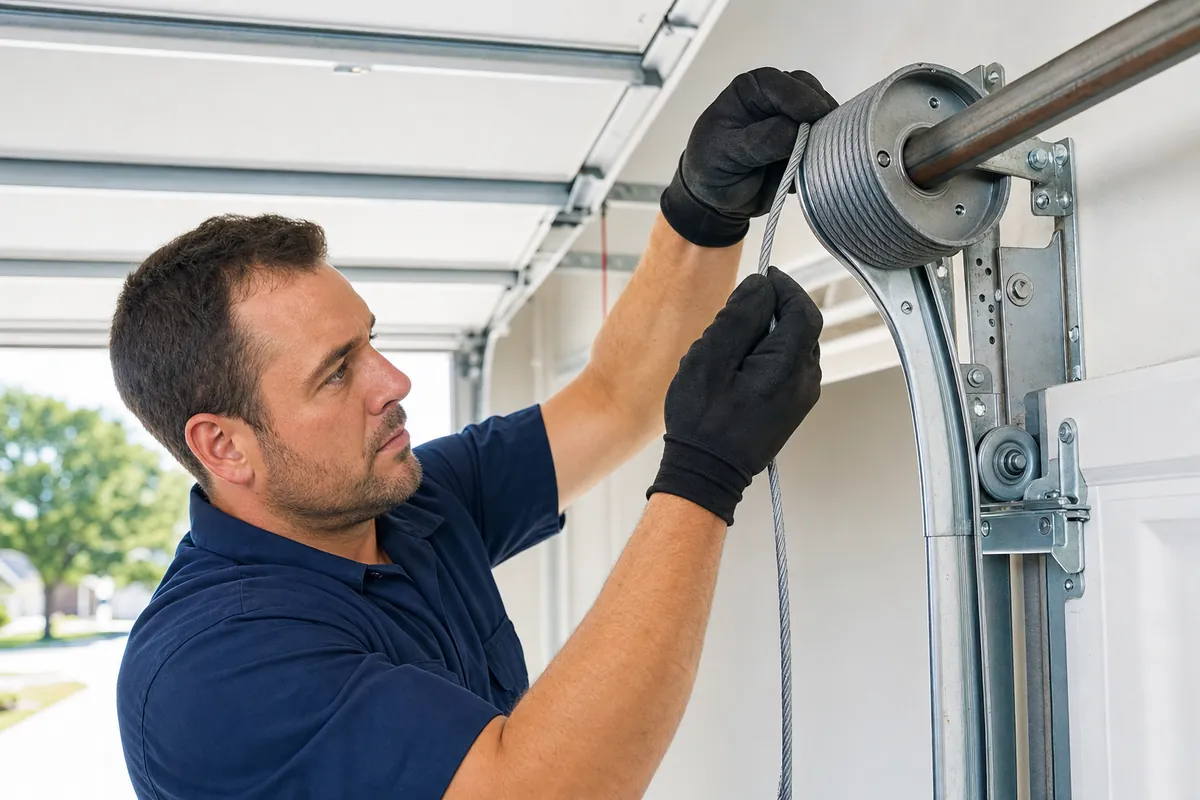

Garage Door Spring Replacement
Broken torsion and extension springs swapped out using proper winding bars.
View detailsSlack, frayed, or snapped lift cables replaced and rewound onto the drums.

Lift cables transfer the spring system's force from the shaft and drums to the lower corners of the door. Both cables must stay intact, correctly routed, and evenly tensioned for the door to rise level. Cable repair deals with frayed wire, cables that have slipped from their drums, damaged bottom attachments, and the spring or track failures that caused the cable to lose position. A loose cable is usually a result, not the whole diagnosis. The door is secured, the source of the tension change is found, and the lift path is restored under control.
Cable life depends on alignment, spring condition, water and salt exposure, and door use. A properly routed cable with intact strands can remain in service for years, but visible fraying, corrosion, kinks, or damage at an end fitting call for replacement. When a cable leaves its drum after a broken spring or binding track, the original fault must be corrected or a new cable can develop the same problem.
Work through the symptom first — some of these turn out to need no technician at all.
When a door binds or loses balance, a cable can become slack and unwrap from its drum. The opposite side may continue lifting, increasing the tilt. Once the cable overlaps or winds in the wrong path, equal lifting force cannot be restored without correcting the underlying condition.
Cables bend around drums during every cycle and can deteriorate from wear, moisture, or contact with damaged hardware. Broken strands weaken the cable and create sharp points that catch. A cable may fail progressively once its remaining strands are carrying more than their intended share.
A roller that catches in a narrowed, bent, or misaligned track can hold one side of the door back. The other cable keeps winding until tension changes enough for a cable to slacken or leave the drum. The cable then displays a problem started elsewhere.
Torsion springs maintain the tension that keeps cables seated while the door runs. When spring force disappears, the door can settle crookedly and one cable may spill from its drum. In that case the cable displacement follows the failed counterbalance, rather than being the first defect.
Winter road salt and de-icing brine can be carried into a Markham garage on vehicle tires. That residue settles on low steel components, including cables, bottom brackets, and lower track sections, where it can promote corrosion long before upper hardware looks weathered. During the winter, look from a safe distance for orange staining, broken strands, or crusted residue near the lower corners. Cleaning tracked-in salt helps reduce ongoing exposure, but it does not restore a cable that is frayed, kinked, or corroded. Stop using a compromised cable and have the cause examined.
A loose or frayed lift cable is tied directly to the counterbalance system, so treat it as loaded hardware. Do not pull on it, trim protruding wires, unfasten a lower cable attachment, or attempt to wrap it around the drum. The door can move abruptly when cable tension changes. Keep the opening clear, avoid using the opener on a tilted door, and submit an online service request for a booking confirmation by email.
The door is stabilized before cable hardware is touched. The opener is disconnected when needed so it cannot pull unevenly against a tilted door or add tension to a cable system that has already lost its correct routing. This step prevents the door from moving while the source of the cable problem is being identified.
The cables, drums, bottom brackets, springs, bearings, tracks, and rollers are checked together. This identifies whether the cable is worn, slipped after a bind, or was displaced by a spring failure or a guide-path problem that needs correction first.
An intact cable may be re-routed, while one that is kinked, frayed, or otherwise compromised is replaced. Drum positioning is set so each side of the door takes an equal share of lift. That prevents one lower corner from leading the other during travel.
The door is moved manually through its range while cable wraps, drum position, and lower corners are observed. The opener is tested only after the lift system is stable, which prevents the motor from concealing a remaining balance or track fault.
Broken torsion and extension springs swapped out using proper winding bars.
View details
Doors put back on track, seized rollers renewed, and bent rails straightened.
View details
Urgent visits when a door is stuck open, jammed halfway, or unsafe to run.
View detailsFill out the form and we'll confirm your appointment by email.
Garage Door Cable Repair is available across every Markham neighbourhood inside the area below.
Map data © Google. Pin shows the service area, not a walk-in location — all work is done at your home.
A real callout, not stock imagery.
A sectional door pulled off its tracks, taken down and supported on site so it could be checked and re-hung safely — photographed on the job.