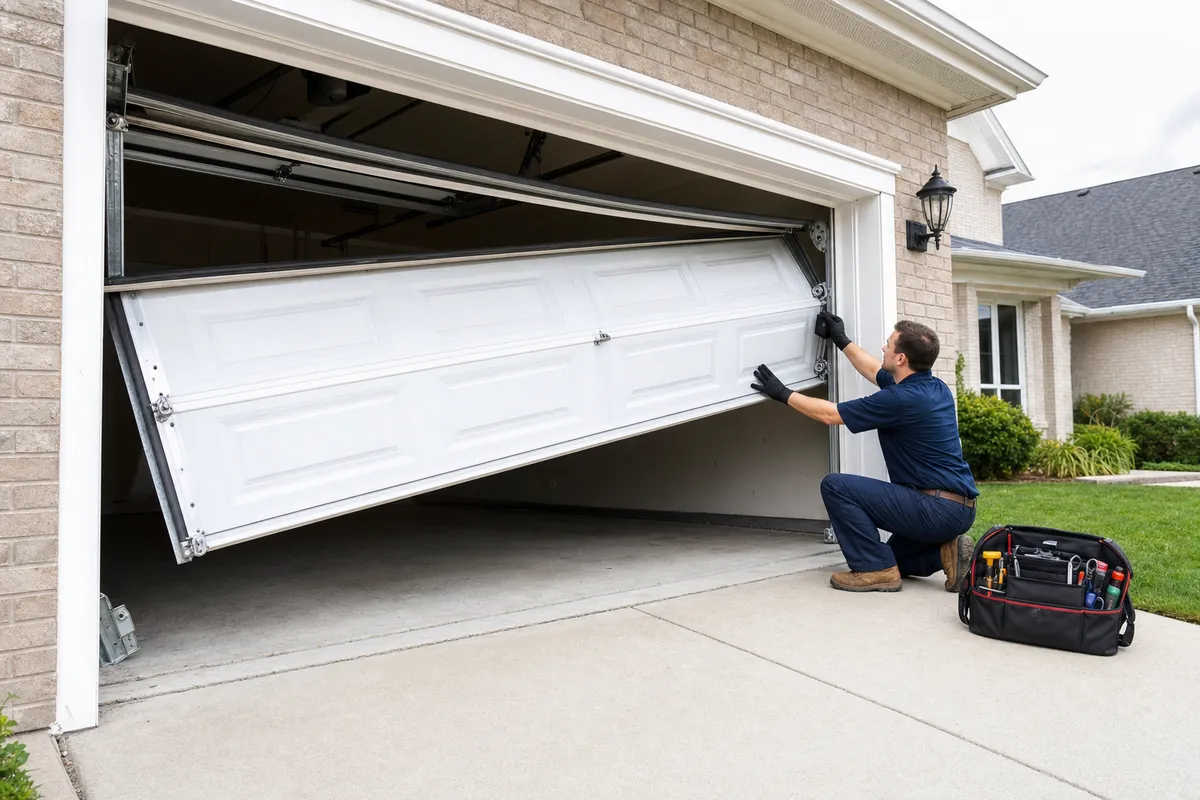

Garage Door Spring Replacement
Broken torsion and extension springs swapped out using proper winding bars.
View detailsUrgent visits when a door is stuck open, jammed halfway, or unsafe to run.

A garage door needs urgent attention when it cannot close securely, has stopped in the opening, or has gone crooked in its tracks. Pushing the button again is rarely the answer. The first concern is whether the door is still supported safely, followed by the cause of the lost movement. A broken spring, loose cable, frozen seal, roller failure, or opener fault can all leave a door unusable. The lift and guide hardware is checked, then the fault is addressed before normal operation resumes. Use the online form to request a booking.
An emergency call concerns the failed part, not an expiry date for the entire door. A sensor, roller, or weatherseal problem may be isolated while the rest of the system remains usable. A broken torsion spring is different: many standard residential springs are designed for about 10,000 cycles, which often corresponds to roughly 7 to 12 years of regular household use. Condition and balance matter more than age alone.
Work through the symptom first — some of these turn out to need no technician at all.
Counterbalance springs carry most of a garage door's weight. When a spring fractures or loses effective tension, the opener may hum, strain, or stop while trying to lift a door that has become far too heavy. The door cannot be treated as normally balanced.
A cable may unwrap from its drum after a roller binds, a track shifts, or the door moves unevenly. One side then receives less lifting force than the other. Continued operation can twist the door stack and damage panels, brackets, or tracks.
A dented track, failed roller, or item in the path can stop the door before it reaches its intended position. The opener responds to that resistance, but repeated cycles can turn a contained guide problem into bent hardware or an off-track door.
Water around the slab can freeze to the bottom seal overnight. The added resistance may prevent opening even when the drive system is sound. Pulling hard or repeatedly running the opener can tear the weatherseal, damage the arm, or overload the motor.
Markham receives an average 146.4 centimetres of snow over about 51 snowy days each year, and winter temperatures regularly move above and below freezing. That combination can send meltwater toward the garage slab and bond the bottom seal to the ground overnight. Clear loose snow and carefully free ice around the seal before using the controls. A door that remains stuck should not be driven upward by the opener. Cold conditions can also expose a roller or spring that was already near failure, so a new winter problem may have more than one cause.
Do not force an emergency door shut or open. Keep children, vehicles, and stored items away from a door that is partly raised, tilted, or hanging on one side. Do not pull a cable, remove a roller, or release the opener from a door that may be supported by a compromised spring. Those actions can let a heavy door fall or release loaded hardware. If the opening cannot be secured safely, leave the area clear and submit the online booking form.
The door's position is assessed first so it can be kept from shifting unexpectedly. If it is safe to do so, the opener is taken out of the operating sequence rather than allowed to pull against a distorted, heavy, or obstructed door.
Springs, cables, drums, the shaft, and bottom fixtures are checked for the failure that changed lifting force. This identifies whether the emergency began in the counterbalance system or whether that system reacted to another mechanical problem. It also checks for impact damage that could prevent safe movement after the lift fault is resolved.
Tracks, rollers, hinges, brackets, and sections are inspected for collision damage, binding, or misalignment. A visible loose cable or crooked panel is not automatically the starting point, so the full travel path needs to be considered. This avoids treating the most obvious symptom as the complete diagnosis.
Once the cause has been corrected, the door is moved through its range under control and checked for level floor contact. The opener is tested after the manual door has proper balance and no longer relies on powered force to move.
Broken torsion and extension springs swapped out using proper winding bars.
View details
Slack, frayed, or snapped lift cables replaced and rewound onto the drums.
View details
Doors put back on track, seized rollers renewed, and bent rails straightened.
View detailsFill out the form and we'll confirm your appointment by email.
Emergency Garage Door Repair is available across every Markham neighbourhood inside the area below.
Map data © Google. Pin shows the service area, not a walk-in location — all work is done at your home.