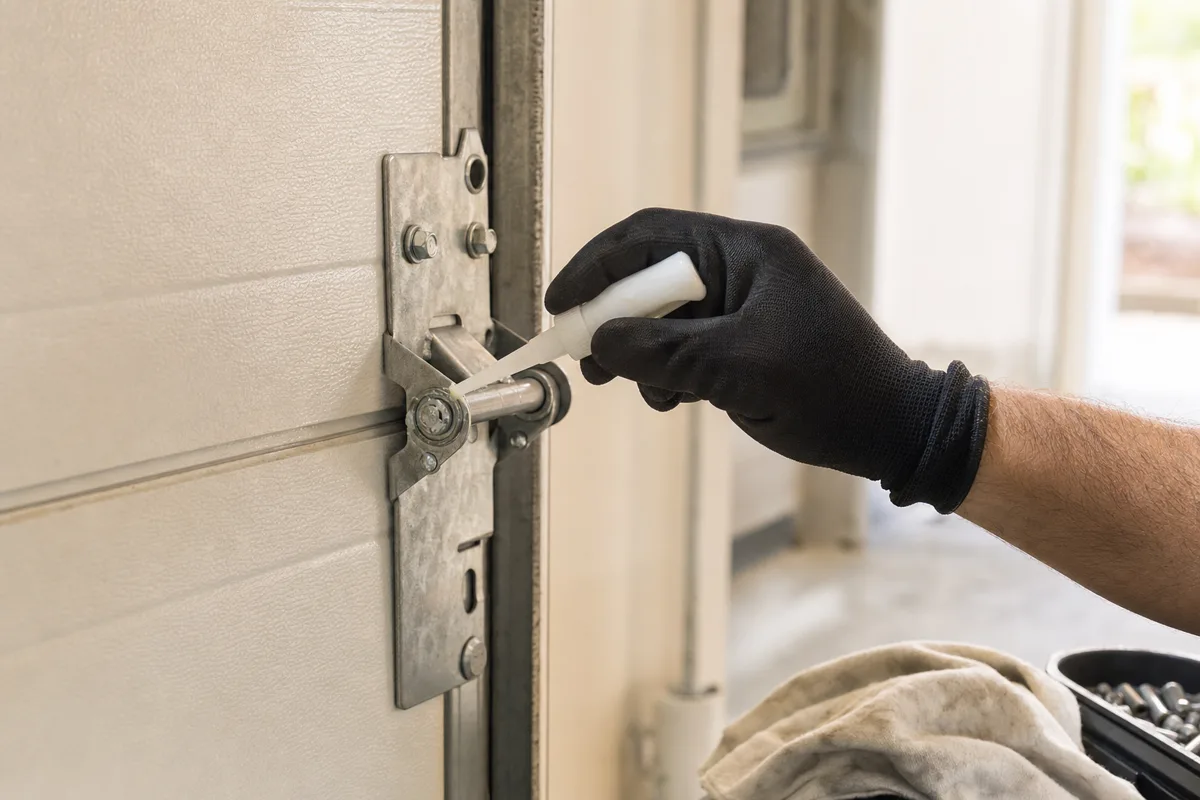

Garage Door Maintenance & Tune-Up
Annual service: lubrication, hardware torque, balance test, and safety checks.
View serviceSome operating sound is normal, but a new scrape, rattle, squeal, or bang warrants attention. Where it happens during travel often supplies the best clue. Watch one cycle from clear of the moving door.
Loud garage-door noise commonly comes from worn rollers, loose hinge hardware, dry pivot points, or a door rubbing its track. Note exactly when the sound occurs, then inspect visible parts with the door down. Stop using the system if it grinds, bangs, jerks, or pulls unevenly. Those symptoms can involve hardware that carries the door's weight and should not be forced.
Noise becomes more useful when you describe its timing and character. A light recurring squeak may arise at a moving pivot, whereas scraping can signal roller contact with a rail. A sudden bang, strong vibration, or opener that sounds strained deserves a more cautious response. Keep the door in sight and listen during one controlled cycle rather than sending repeated commands. Do not stand below the door, reach into a track, or put hands near the hinges while it moves. A properly functioning system should travel in a steady line without violent shaking, jumping rollers, or a motor that labours. If noise appears with uneven motion, stop operation and arrange assessment.
Start at the top. The early checks are the most common causes and need no tools.
Watch one complete cycle from the side, at a safe distance. Decide whether the noise begins as the door starts, follows it through the curved section, happens near the floor, or comes from the motor unit. If the sound is severe, do not repeat the test. Record its location and whether movement remains smooth.
What it means: A noise tied to one point in travel often directs attention to nearby moving hardware.
Check that no ladder, cord, storage item, hook, or loose object touches the door, track, or opener rail. Examine the inside of the closed door for a rattling handle, lock bar, or panel reinforcement. A harmless contact point can sound much like a failing roller or hinge during operation.
What it means: If clearing an adjacent object removes the noise, the door components may not be the source.
With the door fully down, use a light to look for split roller wheels, a roller that wobbles, a missing stem, worn hinge leaves, or dark metal residue below a wheel. Keep fingers outside the track. Each roller should remain seated and roll along its guide rather than climbing an edge.
What it means: Cracking, excess wobble, or metal dust indicates a roller or hinge requiring service.
Look only for fasteners at hinges and support brackets that are plainly protruding. Do not tighten anything around lower brackets, cable drums, springs, or track mounting. Those areas can carry load or change the door's alignment. Make a note of what you see rather than attempting a repair during a noise check.
What it means: Loose visible hinge hardware may rattle, while tensioned or alignment-critical parts need a technician.
During one observed cycle, look for a rail that shakes excessively or a motor that clicks, grinds, or hums without moving the door. Belt and chain drives have some ordinary operating sound, but a sudden change is meaningful. Stop at once if the opener struggles against a door that is not travelling freely.
What it means: A straining opener may be reacting to door resistance or an internal drive problem.
Stop using a noisy door if there is a loud impact sound, harsh grinding, sudden shake, or visible change in its path. Do not assume that oil will correct a cable, spring, roller, or track defect. Never adjust spring hardware or lower brackets, and do not straighten a rail with hand tools. Leave the door down where practical, restrict access to the opening, and use the online form to book a professional inspection.
Markham winters bring road salt and de-icing brine indoors on vehicle tires. As meltwater dries, residue can settle on low steel parts such as rollers, hinges, bottom brackets, and the lower track area. That contamination encourages corrosion and can turn a previously quiet roller into a scrape or rattle. When conditions allow, remove slush from the threshold and wipe exposed low hardware dry rather than covering every component with oil. A fresh noise beginning close to the floor after winter driving is a reason to look for grit, salt residue, and a roller that no longer turns freely.
Fill out the form and we'll confirm your appointment by email.
These guides are written for Markham homes. If the fix is beyond a homeowner check, we work everywhere inside this area.
Map data © Google. Pin shows the service area, not a walk-in location — all work is done at your home.

A real callout, not stock imagery.
A sectional door pulled off its tracks, taken down and supported on site so it could be checked and re-hung safely — photographed on the job.
