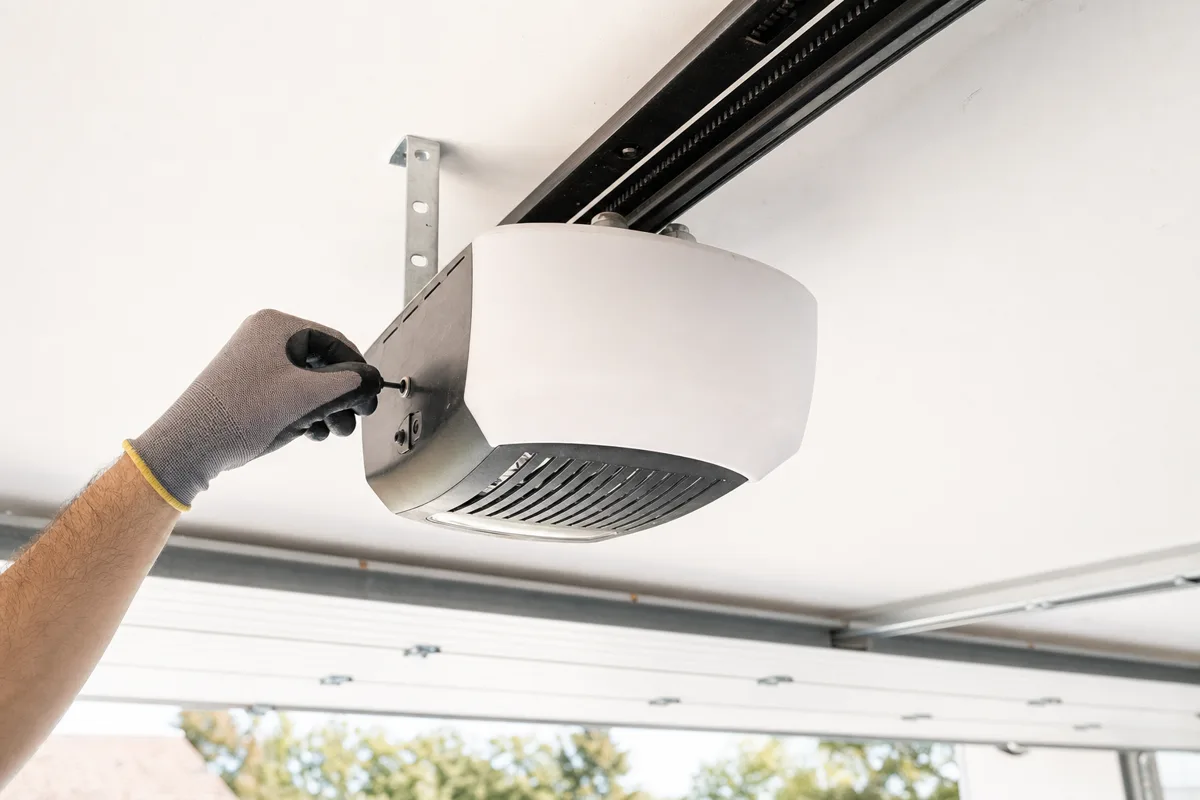

Garage Door Opener Repair
Fault-finding on openers that hum, stall, reverse, or ignore the remote.
View serviceA door that refuses to shut or returns while descending may be reacting to a blocked safety beam or unexpected drag. Make a few simple observations, but discontinue testing if it tilts, catches, or needs force.
Most garage doors that will not close are reacting to a blocked, dirty, misaligned, or glare-affected photo eye. Clear the threshold, wipe both sensor lenses, and confirm their indicator lights show normal alignment. If the door still reverses, drags, shakes, or lowers unevenly, discontinue use. Resistance in the track, rollers, cable system, or springs needs professional assessment.
A closing problem does not automatically mean the opener has failed. The door may be detecting an object at the threshold, a disrupted photo-eye beam, or mechanical drag that makes travel unsafe. Begin by watching the complete opening from a clear position and keep people, pets, and vehicles out of its path. One deliberate test after each check is more useful than repeated button presses. Do not rely on holding the wall control to make the door descend; that can indicate a safety-sensor fault and can conceal a more serious movement problem. If the door runs smoothly after a simple correction, observe several ordinary cycles before considering the issue resolved.
Start at the top. The early checks are the most common causes and need no tools.
Remove anything near the doorway, including bins, tools, vehicle items, packed snow, and loose debris. Inspect the full line where the bottom seal meets the floor, especially at each corner. From a safe viewing position, run one closing attempt and note whether the door stops or returns at the same location.
What it means: A normal close after clearing the floor points to an obstruction at the threshold.
The paired sensors sit low on the tracks, one on each side. Gently wipe their lenses with a clean, dry soft cloth. Check that neither mount has been bumped or twisted, and look for webbing, leaves, cords, or stored items crossing the beam line. Compare the indicator lights with the opener manufacturer's normal signal.
What it means: An unsteady or abnormal sensor light usually identifies a beam or alignment fault.
If the fault happens only in bright daylight, hold cardboard beside the receiving sensor to create shade without covering the doorway or touching the sensor. Then make one normal closing test. Observe whether the receiver light becomes steady while shaded. Do not block the safety beam itself or tape anything over either lens.
What it means: A steadier light and successful close while shaded suggests sunlight is disrupting the receiver.
With the full door visible, try the wired wall control for a single cycle. Check whether its lock or vacation function is active, as that setting can affect remote operation. If the door descends only while the button is held, regard it as a sensor-related warning rather than a long-term way to close the door.
What it means: Hold-to-run closing generally means the photo-eye safety circuit needs attention.
When the door is completely shut, inspect both tracks visually for a bent rail, a roller outside its guide, or a cable that has lost tension. Listen during the next single attempt for scraping, a hard knock, or an abrupt stop. Leave the opener connected whenever the door is above the floor.
What it means: A loose cable, tilted travel, or binding noise calls for mechanical repair before further operation.
Stop attempting to close the door when it hangs to one side, drags in the track, makes a sharp mechanical sound, or has a visibly slack cable. Do not turn opener force controls, loosen track bolts, or push the door down by hand. Springs, cables, and lower brackets support substantial weight and stored energy. If it can be left closed safely, keep the area clear and request an inspection through the online form.
In Markham, a low winter sun angle can shine straight into one photo-eye receiver, particularly where the doorway faces the afternoon light. The pattern is often daylight-specific: the door behaves normally in the evening or under cloud, then returns before reaching the floor in bright conditions. Test for glare before moving any hardware. Keeping the lenses clear of salt film, splash, and snow also matters through winter. If shading proves the cause, a professional can assess whether careful repositioning or an appropriate shield can preserve an unobstructed safety beam.
Fill out the form and we'll confirm your appointment by email.
These guides are written for Markham homes. If the fix is beyond a homeowner check, we work everywhere inside this area.
Map data © Google. Pin shows the service area, not a walk-in location — all work is done at your home.

A real callout, not stock imagery.
A sectional door pulled off its tracks, taken down and supported on site so it could be checked and re-hung safely — photographed on the job.
