
Garage Door Spring Repair
Balance and tension corrected on springs that are still sound but out of adjustment.
View detailsAnnual service: lubrication, hardware torque, balance test, and safety checks.

A garage door tune-up is a practical inspection of the components that allow daily operation to remain smooth, balanced, and predictable. It reviews rollers, hinges, tracks, brackets, cables, springs, weatherseals, opener controls, and photo-eyes for wear, friction, or looseness. The purpose is not to treat normal aging as an emergency. It is to find small changes before they become a stuck door, a strained opener, or a damaged cable. Moving points are lubricated where appropriate, the door's balance and safety functions are checked, and any item requiring repair is identified clearly.
Routine servicing does not erase wear, but it reduces friction and exposes developing faults before they affect other components. Seals and remote batteries often need attention earlier than the lift hardware. Many standard torsion springs are rated at about 10,000 cycles, commonly equating to 7 to 12 years of normal use. Roller and hinge life depends on their design and alignment. Condition, not the calendar date of the last tune-up, should guide replacement.
Work through the symptom first — some of these turn out to need no technician at all.
Lubricant at hinges, rollers, bearings, and springs can dry out or collect dirt. Friction then rises gradually, often before a major travel problem appears. Correct lubrication reduces ordinary resistance, but it cannot repair a damaged roller, distorted track, or spring that has lost its safe operating condition.
Normal door movement can gradually loosen accessible fasteners at hinges, brackets, tracks, and opener supports. Small shifts may become noise or rubbing over time. Finding movement early can prevent a bracket or track position from changing enough to place side load on rollers and panels.
Bottom and perimeter seals compress daily and are exposed to moisture, grit, temperature changes, and vehicle traffic. A seal that is torn, hardened, or flattened can allow drafts, water, and debris into the garage. It may also contribute to ice bonding at the threshold in winter.
Springs do not always fail without warning. As they age, a door may gradually feel heavier or less steady around mid-travel. A balance check can identify the change before the opener is repeatedly asked to compensate for a lift system that is no longer providing proper assistance.
Royal Orchard has a substantial stock of detached homes built in the 1970s and 1980s, while Milliken Mills East and West include many 1980s detached homes on narrower lots. If the door hardware is original to those homes, a yearly tune-up is a useful opportunity to record condition rather than guess from appearance. Older does not automatically mean unsafe, and the exact garage configuration varies by property. The practical check is whether rollers, tracks, springs, cables, seals, and opener safety features still operate as intended. Addressing small friction or weatherseal issues early can help avoid a winter interruption.
Homeowners can keep the sensor beam unobstructed, clear loose debris from reachable guide areas, examine weatherseals, replace remote batteries, and note new noises. Counterbalance hardware is not part of routine do-it-yourself care. Do not turn torsion springs, release cable drums, remove lower cable connections, or alter spring force. If the door feels unusually heavy, a coil has separated, or cable wires are damaged, stop regular operation and use the online form to arrange the correct service.
Rollers, hinges, tracks, brackets, cables, bearing plates, weatherseals, and visible spring condition are examined. The inspection looks for wear, corrosion, loosening, and points of friction. Notes are based on the component's condition, not an assumption that every aged part requires immediate replacement.
With the opener disengaged when it is safe to do so, the door is assessed by hand through its travel. This can reveal a heavy point, drift, binding, or uneven movement that a powered opener may conceal during routine use.
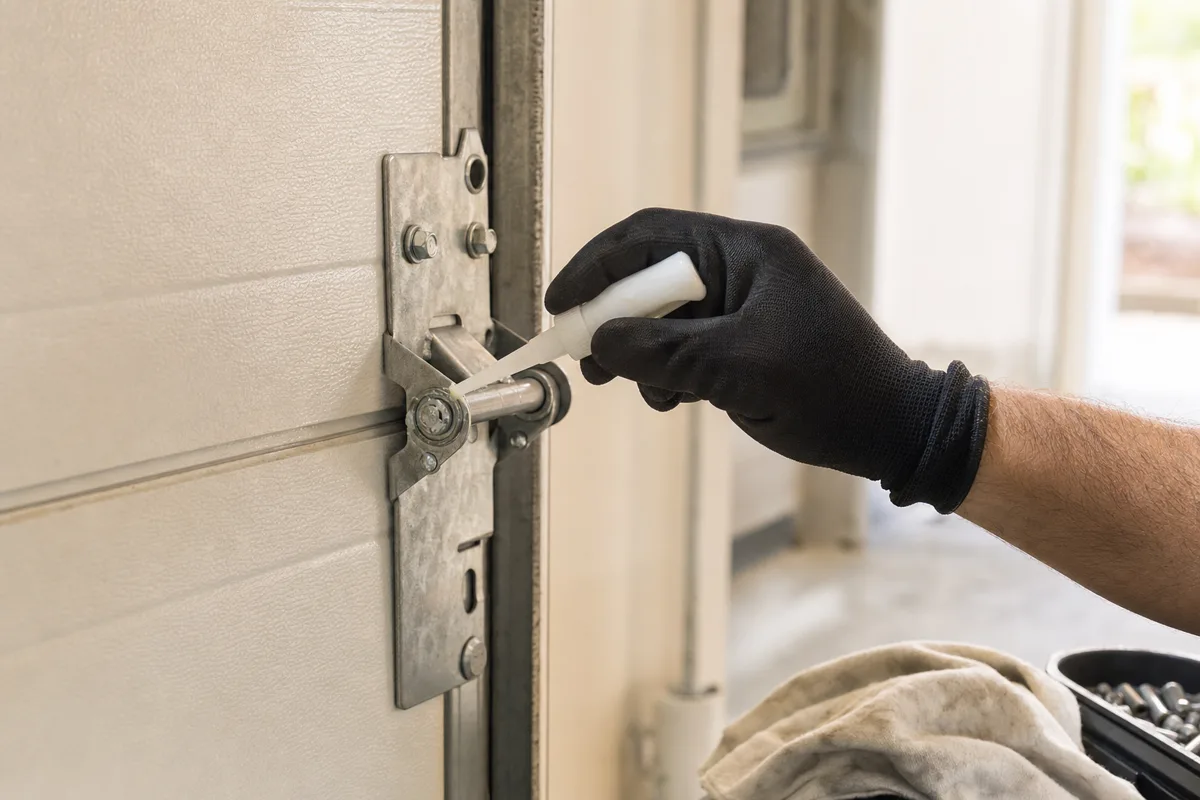
Appropriate garage-door lubricant is applied to suitable moving components after mechanical concerns are addressed. Accessible fasteners or alignment issues are corrected as needed. Lubrication is not used to hide a cracked roller, worn cable, damaged track, or spring problem that needs separate service.
Controls, travel limits, photo-eye alignment, and reversal response are checked after the mechanical review. The door's movement and seals are observed as part of the same test. This confirms that everyday operation is not relying on extra force or a bypassed safety feature.
Balance and tension corrected on springs that are still sound but out of adjustment.
View details
Fault-finding on openers that hum, stall, reverse, or ignore the remote.
View detailsDoors put back on track, seized rollers renewed, and bent rails straightened.
View detailsFill out the form and we'll confirm your appointment by email.
Garage Door Maintenance & Tune-Up is available across every Markham neighbourhood inside the area below.
Map data © Google. Pin shows the service area, not a walk-in location — all work is done at your home.

A real callout, not stock imagery.
A sectional door pulled off its tracks, taken down and supported on site so it could be checked and re-hung safely — photographed on the job.