
Garage Door Opener Repair
Fault-finding on openers that hum, stall, reverse, or ignore the remote.
View detailsQuiet belt-drive and smart openers fitted with rolling-code security.

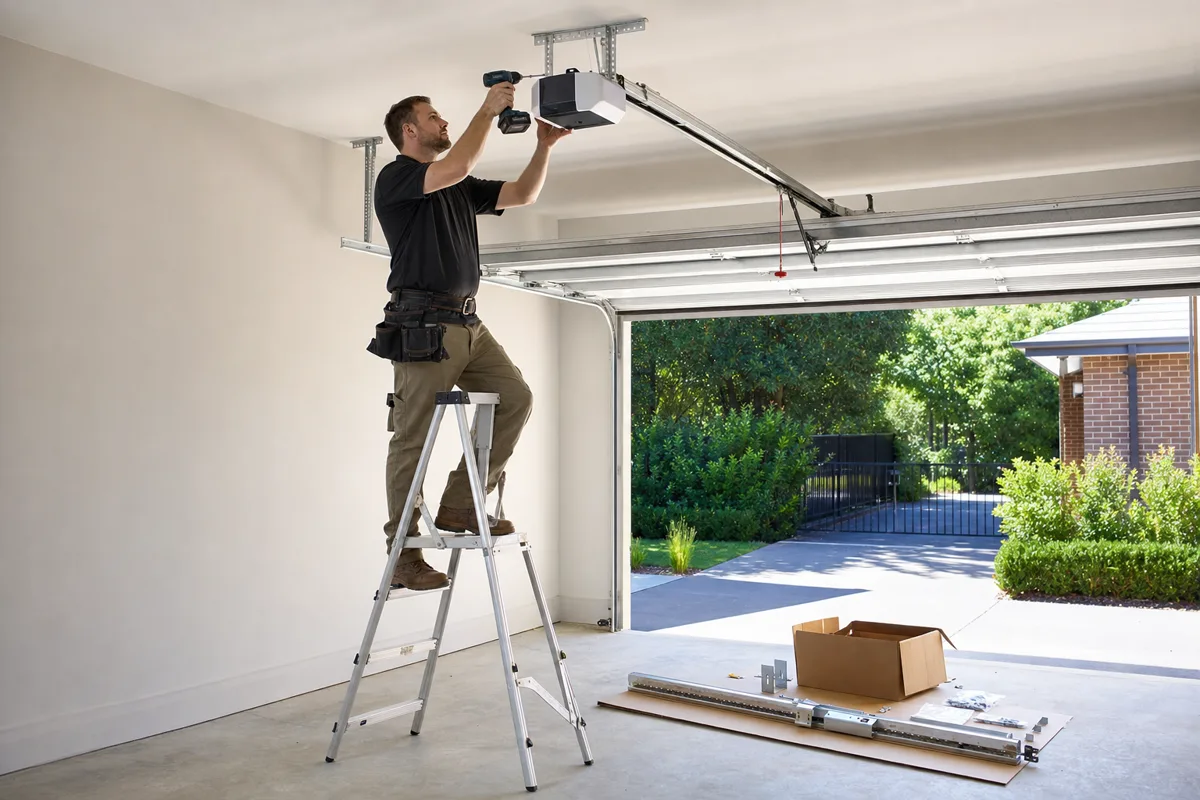
A new garage door opener must be fitted to a door that already moves correctly by hand. Installation is more than hanging a motor from the ceiling: the drive type, rail, header connection, overhead support, door arm, photo-eyes, controls, and travel limits all need to suit the opening. The existing door's balance, tracks, springs, and clearance are checked before a powered unit is selected or mounted. Once the mechanical door operates smoothly, the opener is secured, safety controls are set up, and the completed system is tested for normal travel and reversal behaviour.
A garage door opener can operate for many years, but its useful life is tied closely to how easily the door moves. Proper spring balance and free rollers reduce strain on the motor, drive gear, rail, and door arm. A new unit becomes reasonable when key drive parts are badly worn, unavailable, or no longer meet needed safety and access functions. Springs, cables, rollers, and seals remain separate wear components after an opener installation.
Work through the symptom first — some of these turn out to need no technician at all.
Gears, sprockets, belts, chains, trolleys, and rails wear at different rates. When several key drive components are compromised or unavailable, fitting a new opener may be more sensible than piecemeal repair. The decision still begins with confirming that the door itself is balanced.
Older equipment may not have a dependable photo-eye arrangement or consistent reversal response. Replacing the opener gives the system a chance to establish properly positioned sensors, usable controls, and correctly set travel behaviour that responds to the door's actual movement and the clear opening.
A motor and rail need firm support at the header, ceiling, and door arm. Loose, improvised, or undersized support transfers vibration into the rail and can make normal operation noisy or unreliable. Good mounting protects both the equipment and the door connection.
A household's requirements can change even when the old unit still operates. Additional remotes, a keypad, battery backup, quieter drive operation, or compatibility with a replacement door may make an updated installation appropriate. Features should be chosen after the operating door and mounting conditions are reviewed.
Angus Glen has continued to build out since the community began forming in 1996, and Angus Glen South Village remains a newer development area. If a failing opener or door was installed by the builder on a recently completed home, check the builder and Tarion warranty process before paying for third-party work. Warranty status is property-specific, so it should never be assumed from the neighbourhood alone. Once that is clear, installation planning still needs to confirm the door balance, overhead clearance, mounting structure, and the access controls needed for the household.
Installing an operator involves overhead supports and electrical work, but an unbalanced door is often the more serious concern. Resolve spring, cable, roller, track, and panel faults before connecting a new drive unit. Never defeat the photo-eye system to make the door close. Keep vehicles and stored belongings outside the opening while testing occurs. Solid mounting, functional sensors, and carefully set travel limits are all part of safe household operation.
Manual balance, spring assistance, tracks, rollers, and required clearance are checked before the opener arrangement is planned. The motor is selected to work with a sound door system, never as a substitute for correcting an existing cable, spring, panel, or guide-path fault.
The header bracket, rail, motor supports, and door arm are positioned and attached for the required geometry. Fasteners and ceiling supports are set to avoid sagging, rubbing, excess vibration, or a poor connection between the drive and the top section of the door.
Photo-eyes are mounted near the floor, aligned, and connected so the closing cycle reacts to an interrupted beam. The wall control and selected access devices are installed and checked. The sensor path is kept clear of objects that can block normal closing operation.
Open and close limits, force response, remotes, and reversal behaviour are set with the completed door system. Opening, closing, sensor interruption, and emergency release operation are tested. This final check confirms that the opener guides the door smoothly without masking balance or alignment concerns.
Fault-finding on openers that hum, stall, reverse, or ignore the remote.
View details
Insulated replacement doors measured, specified, and fitted to the opening.
View details
Annual service: lubrication, hardware torque, balance test, and safety checks.
View detailsFill out the form and we'll confirm your appointment by email.
Garage Door Opener Installation is available across every Markham neighbourhood inside the area below.
Map data © Google. Pin shows the service area, not a walk-in location — all work is done at your home.

A real callout, not stock imagery.
A sectional door pulled off its tracks, taken down and supported on site so it could be checked and re-hung safely — photographed on the job.