
Garage Door Opener Installation
Quiet belt-drive and smart openers fitted with rolling-code security.
View detailsInsulated replacement doors measured, specified, and fitted to the opening.

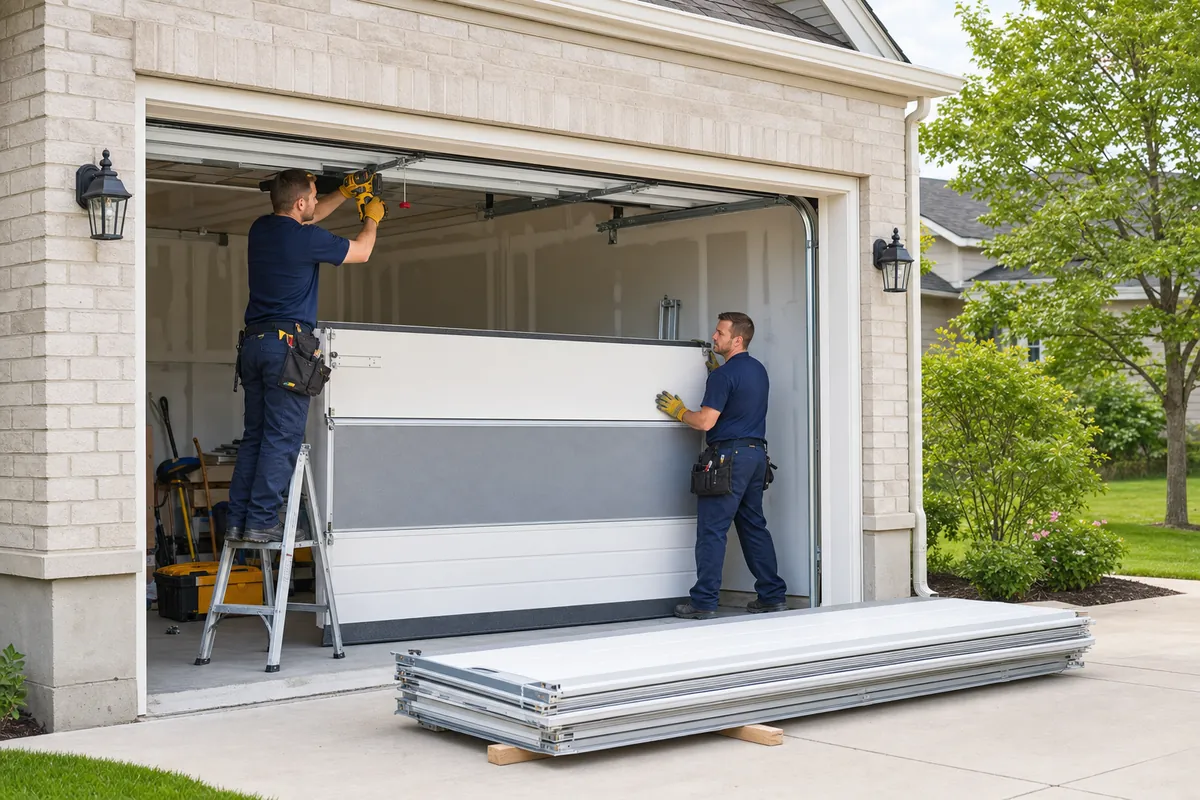
Installing a new garage door means matching the door and its lift hardware to the actual opening. Measurements of width, height, headroom, side room, backroom, slab condition, and framing guide the choice of sections, track layout, springs, cables, rollers, seals, and reinforcement. The old door and hardware are removed in a controlled sequence, then the new system is assembled and balanced before an opener is connected. The finished door should sit level, seal against the floor, follow its tracks smoothly, and allow the opener to guide it rather than carry the door's weight.
How long a new door serves depends on its construction, exposure, servicing, and operating frequency. The panel stack may remain usable for many years, while seals, rollers, springs, cables, and operator parts require attention on different timetables. A full replacement is appropriate once the existing door cannot be made to run squarely or keep out the weather, or when extensive repairs would still leave a weakened arrangement. Periodic checks support a longer working life.
Our troubleshooting guides walk the diagnostic checks in order so you can confirm the fault before booking.
When corrosion, delamination, cracks, weakened joints, or water damage affect several panels, isolated repairs may not restore the door's stiffness or weather resistance. A replacement door renews the connected structure instead of repeatedly repairing sections that no longer work together reliably.
Older doors can use panel profiles, seals, and hardware that are no longer produced. A non-matching substitute may affect fit, appearance, and safe movement. When compatible parts cannot be sourced, a new door system can be the more practical route to proper alignment and balance.
A garage used more often for vehicles, storage, a workshop, or connection to an attached home may need better weathersealing, insulation, lighting, or dependable daily operation. Those functional needs can justify a planned door replacement even when the old door has not fully failed.
Repeated panel flexing, hinge movement, track displacement, or reinforcement issues can show that individual repairs no longer provide stable travel. Replacing the door and correctly matched lift components prevents worn hardware from being mixed with a new section stack that has different requirements.
Victoria Square is not one of Markham's four Heritage Conservation Districts, but it includes individually designated heritage property, such as the Hatton House on Victoria Square Boulevard. That distinction matters when planning a new visible garage door or outbuilding door: heritage requirements may apply to the specific property even outside a district. The area also has a mix of older homes and newer development, so no single opening size or track arrangement should be assumed. Measure the property itself, confirm whether it has a heritage designation, and settle any required review before selecting a door that changes the exterior.
New-door work includes heavy panels, overhead rails, and counterbalance components that store significant energy. Spring and cable work requires proper equipment and should not be attempted as a homeowner adjustment. Move vehicles, tools, and stored items out of the work area beforehand. Do not reuse distorted rails, damaged cables, or suspect spring parts simply because they appear compatible. A correctly matched lift system is safer than combining new panels with unknown hardware.
The opening, floor, framing, side room, headroom, and backroom are measured before the door is selected. These dimensions determine the available track geometry, spring arrangement, seal contact, and opener clearance. Nominal door size alone does not establish whether an installation will fit correctly.
Existing sections, tracks, springs, cables, rollers, and weatherseals are removed in a controlled order. The framing and mounting surfaces are then reviewed for condition and suitability. A visibly worn or damaged component is not reused simply because it still appears to fit the opening.
The sections are built up progressively with compatible hinges, wheels, guide rails, shaft hardware, springs, lift cables, bracing, and perimeter seals. Alignment is checked throughout so the completed door stays level and makes even contact around the opening. Each part is selected to suit the size and weight of the door being installed.
The completed door is tested manually and balanced before the opener is attached or adjusted. Full travel, floor contact, seal contact, and track movement are checked. Where an opener is used, its limits and reversal features are set only after the door itself operates correctly.
Quiet belt-drive and smart openers fitted with rolling-code security.
View details
Dented, rusted, or impact-damaged sections matched to the door you already have.
View details
Annual service: lubrication, hardware torque, balance test, and safety checks.
View detailsFill out the form and we'll confirm your appointment by email.
New Garage Door Installation is available across every Markham neighbourhood inside the area below.
Map data © Google. Pin shows the service area, not a walk-in location — all work is done at your home.

A real callout, not stock imagery.
A sectional door pulled off its tracks, taken down and supported on site so it could be checked and re-hung safely — photographed on the job.